
Loading...
Serving Hanahan, SC and surrounding areas. (843) 543-6405
Hanahan Insulation provides crawl space insulation, vapor barriers, attic upgrades, and air sealing for James Island, SC homeowners dealing with the year-round salt air, tidal humidity, and storm exposure that come with living on a coastal barrier island. We have served this area since 2020 and respond to every request within one business day.
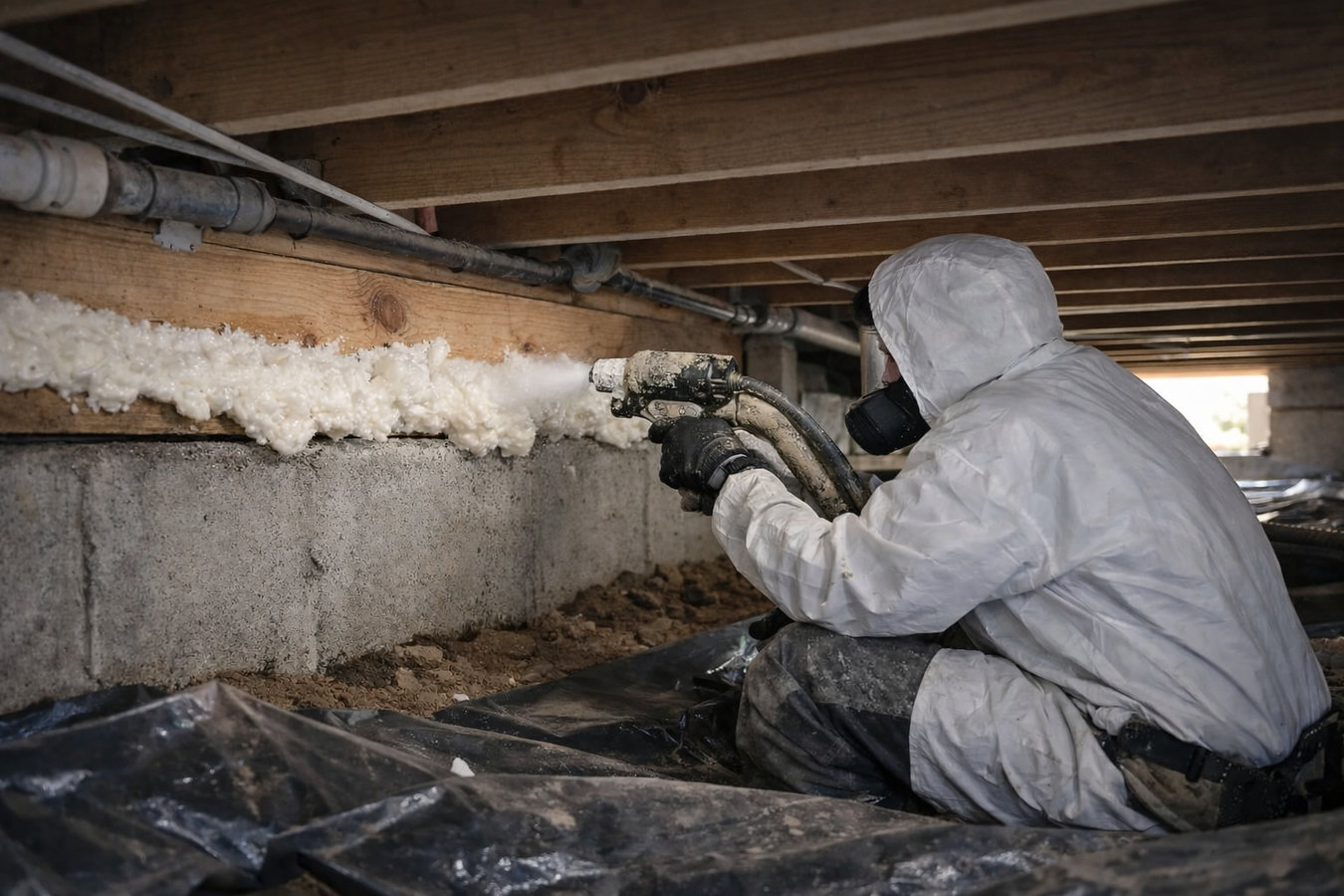
James Island homes sit on coastal land surrounded by tidal creeks and marshes, and many of the older properties have crawl space or pier-and-beam foundations directly exposed to that moisture year-round. Without proper insulation and a vapor barrier, the warm, humid air that flows freely under those homes works its way into wood framing and subfloor material season after season - a slow process with expensive results. Our crawl space insulation page explains the options and what to expect from the process.
On a coastal island where the ground stays wet and salt air circulates year-round, a properly installed vapor barrier under the floor is one of the most important things an older James Island home can have. Without one, bare soil in the crawl space evaporates moisture upward into the framing constantly. For homes in the island's lower-lying neighborhoods near tidal water, this is often the first step before any other insulation work begins.
James Island's postwar brick ranch homes - many built in the 1950s through 1970s along Folly Road and the older side streets - have attics that have never been upgraded. In the island's coastal heat, attic temperatures on summer afternoons regularly push past 130 degrees, and that heat pushes straight through thin or compressed insulation into the rooms below. Bringing those attics up to an appropriate depth for this climate makes a measurable difference on cooling bills.
Closed-cell spray foam is the most durable insulation option for James Island crawl spaces and rim joists because it resists moisture intrusion rather than absorbing it. In a coastal environment where salt air and humidity accelerate the breakdown of conventional insulation materials, spray foam holds up where fiberglass batts typically fail within a few years. It is particularly well-suited to homes near tidal creeks and marshes where ground moisture is a persistent year-round issue.
For James Island attics where the moisture threat is lower and the main need is thermal performance, blown-in cellulose or fiberglass is a cost-effective way to reach the insulation depth this climate zone demands. It conforms evenly to irregular framing - common in older coastal homes built with non-standard lumber sizes - and most attic jobs are completed in a single day without major disruption to the household.
Older James Island homes have decades of small gaps and penetrations in the attic floor - around recessed lights, plumbing chases, and wall framing - that allow hot, salt-laden outdoor air to push into living spaces continuously in summer. Sealing those gaps before adding new insulation is the step that makes a real difference, and skipping it is the most common reason an attic upgrade does not produce the energy savings a homeowner expected.
James Island is a barrier island at the edge of the Charleston metro, and the conditions here are unlike anything a few miles inland. The island sits at very low elevation - much of it just a few feet above sea level - and is surrounded on multiple sides by tidal creeks and salt marshes. That geography means salt air and humidity are present every day of the year, not just in summer. Those conditions wear on home exteriors, insulation, and structural framing faster than in any inland location, and contractors who do not work in coastal environments regularly do not always recognize the signs until damage is already significant. What works for insulation in Summerville or Goose Creek does not automatically work the same way on James Island.
The island's housing stock adds another layer of complexity. Homes range from postwar brick ranch houses built in the 1950s and 1960s with minimal original insulation, to newer subdivision homes that went up in the 1990s and 2000s on slab foundations along Folly Road, to elevated pier homes in FEMA flood zones near the waterways. Each of those construction types requires a different approach. Elevated homes have crawl spaces and pier structures that need regular inspection for moisture damage and wood rot. Brick ranch homes often have original attic insulation that has settled and compressed to the point where it provides little measurable thermal resistance. Newer slab homes face different moisture paths than raised foundations, but the coastal humidity still finds its way in through windows, doors, and wall penetrations. Getting the diagnosis right matters before any material is chosen.
Our crew works throughout James Island regularly, and we understand what coastal conditions actually mean for insulation performance and durability. We pull permits through Charleston County Building Inspection Services when required and are familiar with the mix of home types across the island - from the older brick ranches on the streets near the bridges into Charleston, to the elevated pier homes in the flood zones near the tidal creeks, to the newer subdivision homes along the Folly Road corridor. Those are three very different jobs, and we approach each one accordingly.
James Island is centered on Folly Road - SC-171 - which runs from the bridge at Charleston straight through the island to Folly Beach. Most residents are familiar with James Island County Park, which sits on the western side of the island and draws families from across the Charleston area. The neighborhoods east of Folly Road, near the tidal creeks and marsh edges, are where we most often see the moisture problems that have built up over decades in older crawl space homes. Those are also the properties where the right insulation choice - closed-cell spray foam over fiberglass batts - makes the biggest long-term difference.
We also serve Folly Beach just past the end of Folly Road, where the coastal exposure is even more intense and the insulation needs are similar but often more urgent. If you are on James Island and ready to find out what your home actually needs, a free on-site assessment is the right starting point.
When you reach out, we ask a few quick questions about your home - its age, whether you have a crawl space, and what you have been noticing. We respond within one business day and can typically schedule your assessment within a few days. There is no charge for the initial visit.
We come to your home, inspect the attic and crawl space directly, and assess what is there and what it actually needs. The estimate you receive is written and itemized - no verbal quotes that change once work begins. You have as much time as you need to review it before deciding anything.
Most crawl space insulation jobs on James Island are completed in one day. Projects that include moisture remediation or a combination of crawl space and attic work may take two days. You do not need to leave your home, but someone should be available during the work in case questions come up.
Before the crew leaves, we walk you through what was done and share photos from inside the crawl space - since most homeowners do not want to go under there themselves. You get a clear record for your files. Your home is ready to use immediately after the work is complete, with no curing or drying period required for most insulation types.
We serve James Island and all of Charleston County. Free on-site assessment, written estimate, and a response within one business day.
(843) 543-6405James Island is a coastal barrier island in Charleston County, situated just west of downtown Charleston and accessible via bridges from the peninsula. With around 12,000 to 13,000 residents, it is a substantial suburban community that has grown steadily over the past several decades as families look for a quieter location close to the city. The island is home to a wide mix of housing ages and types: the older neighborhoods near the bridges to Charleston are defined by single-story brick ranch homes built in the 1950s through 1970s, while the interior of the island has filled in with newer wood-frame subdivision homes on slab foundations built from the 1990s onward. Closer to the tidal creeks and marsh edges, elevated pier homes in FEMA flood zones represent a third distinct property type with its own insulation and moisture-management requirements. Learn more about the island at the James Island, SC Wikipedia page.
Folly Road runs through the center of the island from the Charleston bridge to Folly Beach, and James Island County Park - one of the most visited parks in the Charleston area - sits on the western side near the Wappoo Creek waterway. The island borders Charleston to the north and east, and Folly Beach to the south via Folly Road. Residents of Charleston and West Ashley - the neighborhoods just across the bridges from James Island - often face similar coastal conditions and insulation challenges. If you live on James Island and want to find out where your home stands, we are glad to come out and take a look.
Seals gaps and expands on contact for airtight, lasting thermal protection.
Learn MoreProtects floors and pipes from moisture and temperature extremes below.
Learn MoreDense, waterproof foam delivering the highest R-value per inch available.
Learn MoreLightweight foam that fills large cavities and absorbs sound effectively.
Learn MoreCode-compliant insulation for offices, warehouses, and commercial buildings.
Learn MoreBlocks ground moisture to prevent mold, rot, and structural damage.
Learn MoreControls moisture migration throughout your home for a healthier environment.
Learn MoreTargets attic bypasses and penetrations to stop conditioned air from escaping.
Learn MoreUpgrades insulation in existing finished walls without major demolition.
Learn MoreSalt air and tidal humidity require materials and methods that work in the real environment here - call today and we will come out, inspect your home, and give you a straight recommendation.